


Yosvani Rosell García must not die

By Zoé Valdes
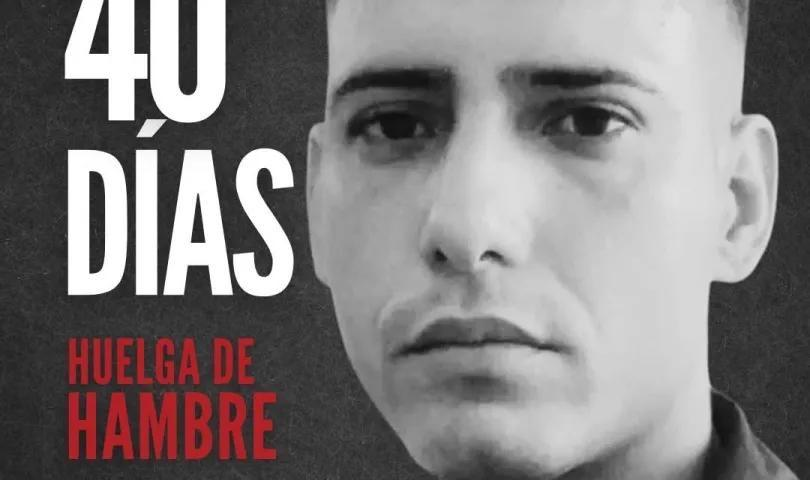
Foto: Yosvani Rosell García.
(eldebate.com)- Yosvani Rosell García is a well-known Cuban activist and opposition figure who has devoted part of his youth to denouncing the social and political injustices that take place in Cuba. Coming from a working-class family, Rosell García has repeatedly faced repression by the authorities, becoming an uncomfortable voice for the regime. A political prisoner since July 11, 2021—when he took to the streets of Cuba to protest peacefully and demand human rights—he was arrested and sentenced to many years of unjust imprisonment. He belongs to the Republican Party of Cuba, as does María Cristina Garrido, a poet, a young woman, and a political prisoner, mother of two children. At present, Yosvani is between life and death after more than thirty days on a hunger strike in a Castroist dungeon.
Other prisoners have been beaten to death during extreme hunger strikes, as was the case of Pedro Luis Boitel and Orlando Zapata Tamayo, while others have carried out numerous and prolonged hunger and thirst strikes that have severely damaged their health, such as Guillermo “Coco” Fariñas Hernández, winner of the Sakharov Prize for Human Rights.
The decision to begin a hunger strike is usually an extreme measure, adopted by those who feel there are no institutional channels through which to pursue their demands or protests. In the case of Yosvani Rosell García, the hunger strike responds to the authorities’ lack of response to demands for respect for human rights, the release of political prisoners, his own release, and improved prison conditions. This action seeks to draw international attention and mobilize Cuban and international civil society. But in the Cuban case, that attention almost never—indeed, never—arrives. Hence my opposition to hunger strikes. We do not need more young people murdered, nor self-immolated in the face of international indifference.
Carrying out a hunger strike in Cuba entails serious risks to the striker’s health and life. Physical deterioration can be rapid, and in the Cuban prison context, unsanitary conditions, lack of adequate medical care, and isolation further aggravate the situation. Various human rights organizations have warned about the vulnerability of those who resort to this form of protest on the island.
Yosvani Rosell García’s hunger strike has generated reactions both inside and outside Cuba, although only minimally within Cuban exile circles. Activists, relatives, and human rights organizations in Miami and parts of the Cuban-European exile have expressed concern and demand that the Castroist regime address his demands and guarantee his physical integrity. At the international level, various Cuban voices have joined in condemning the repression and have urged the regime to open channels of dialogue and negotiation—which also lead nowhere. Personally, I demand the unconditional release of all political prisoners. No amnesty or anything of the sort. Total release with all their rights, without any acknowledgment of guilt whatsoever.
The case of Yosvani Rosell García highlights the importance of international solidarity and support in defending the human rights that Cubans need and expect. Denunciation campaigns, diplomatic pressure, and media visibility are fundamental tools to protect those who, like Rosell García, risk their lives for freedom and justice—although I personally advocate closing the U.S. Embassy in Cuba.
Yosvani Rosell García’s hunger strike is a reminder of the high cost paid by human rights defenders in my homeland, my country of origin. His resistance is a symbol of the peaceful struggle for a just and free society, and a call of attention to the international community not to forget the situation of political prisoners and human rights activists.
A few days ago, Yosvani began to suffer symptoms of extreme severity. Let us hope the irreparable does not occur and that he survives. He is a father, a husband, a son. But if the irreparable were to happen and his heart were to stop, we should not only blame the criminal tyranny; we should also begin to blame those who turn their backs on genuine fighters, focusing instead on traitors who have, in one way or another, made pacts with the tyranny.


Comments